

Thursday, 8:40 AM
The owner of a small design studio opens her phone and finds four messages from friends. The first: "Have you seen Meta's Muse? It shops, fills in forms, does everything." The second: "OpenAI released dots, an agent that works for you around the clock." The third: "I've had Grok Bot since August, and three bots working for me." And the fourth, from last night: "Anthropic released Claude Duet. Every morning it tells you what's urgent today."
Four agents, four giant companies, ten weeks between the first and the last. They all promise almost the same thing. And she asks what everyone is asking this week: how are they actually different, and which one fits my business?
The short answer: they do similar things, but each one lives somewhere else.
Muse, dots, Grok Bot or Claude Duet? This is the comparison everyone is searching for right now. Muse is Meta's personal agent. dots are OpenAI's standing agents inside ChatGPT. Grok Bot is a team of standing agents from SpaceXSI (formerly xAI). Claude Duet is Anthropic's proactive agent, announced on October 21. All four work on their own computer in the cloud, connect to apps, and stop for your approval before sensitive actions. We checked every figure against the four companies' official sources, and clearly marked what comes from the media and what hasn't been published yet.
Full disclosure: Platin Digital is an OpenAI Select Partner, and we usually build our clients' agents on Hermes Agent, open-source software. That's why we took extra care to be fair to all four companies, and every assessment of ours is marked as such.
In short
- Muse (Meta) is a personal agent in an app and in WhatsApp, with a free tier and a separate gatekeeper called Sentinel. Strong in shopping and Meta's tools. Available only in the US and Canada.
- dots (OpenAI) are standing agents inside ChatGPT, with a cloud computer for each dot and an approval rule for each type of action. You can talk to them in Slack too. Paid only, starting at $100 a month, and rolling out gradually, Israel included.
- Grok Bot (SpaceXSI) is a team of bots that share one cloud computer, sign in to sites with your login and learn a process from a demonstration. Included in plans starting at $30 a month. No country list has been published.
- Claude Duet (Anthropic) is an agent for small business owners and professionals: it sends a morning summary, checks your accounts every few hours and prepares work for your approval. Included in Claude Pro, at $20 a month, but for now only in the US and through a waitlist. None of the four officially supports Hebrew.
Home, office, workshop and corner office: the difference in one sentence
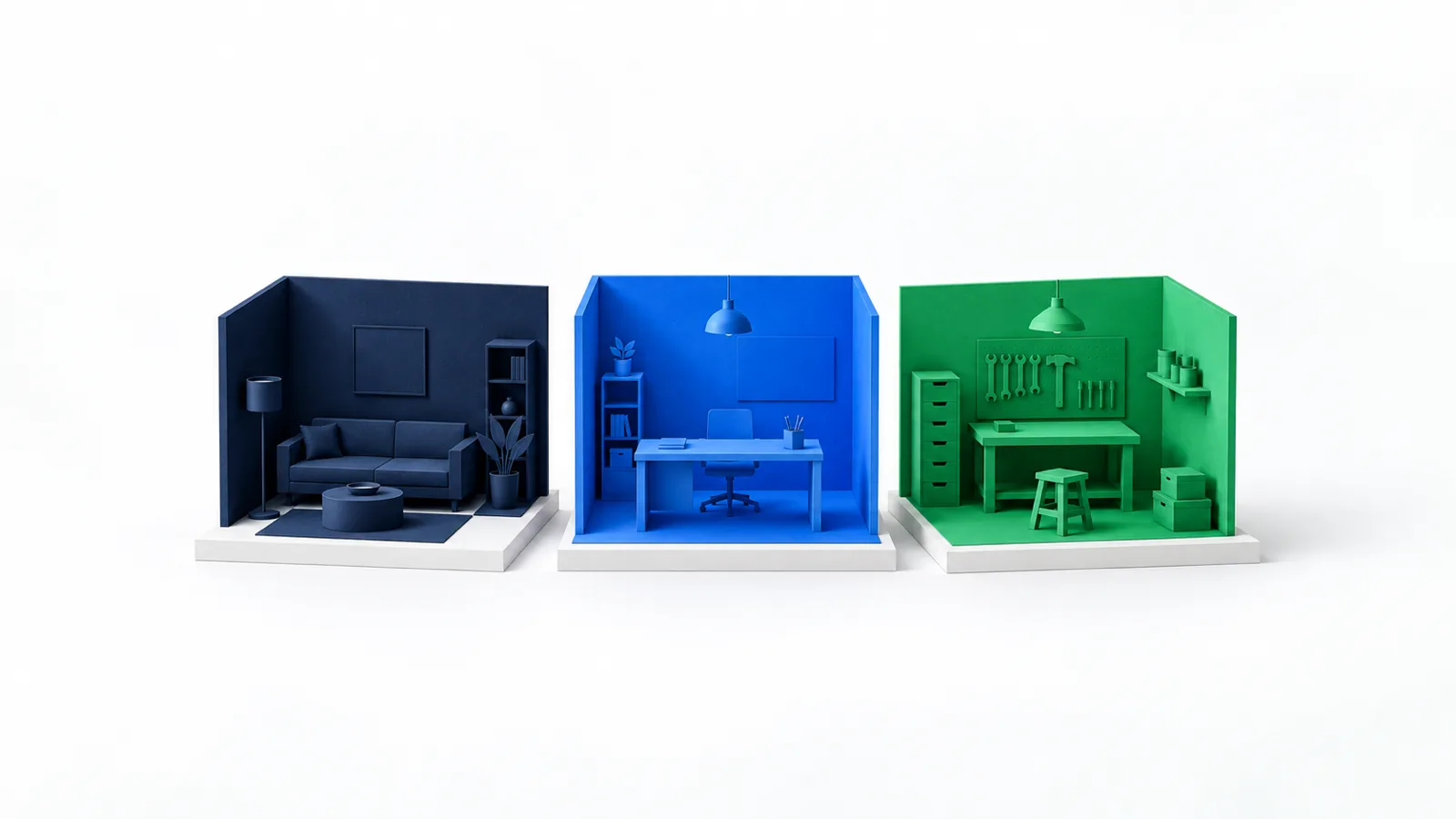
Muse was born at home. dots were born in the office. Grok Bot was born in the workshop. Claude Duet was born in the corner office. That's the image to remember, and it explains almost every difference below.
Muse is a personal assistant that lives in Meta's home. It buys, books and turns a recipe video into a shopping list. Its business version sits where small businesses already are: on their Facebook Page, on Instagram and in their ad account. On October 21, Mark Zuckerberg said on Meta's earnings call that more than 10 million people have already adopted Muse, and that shopping is one of its top uses.
A dot is a colleague who sits in ChatGPT's office. You tag it in a Slack thread, and it picks a project up where it left off. Its tools are teamwork tools: email, files, code and shared documents.
Grok Bot is a team of apprentices in a workshop. Several bots, each with a role, all working at the same bench: one cloud computer, with the same files and the same logins. You can show them once how to do something. And whatever is on the bench is available to everyone working at it.
Claude Duet is the business owner's chief of staff. It works for one person, not for a team. In the morning it shows up with a list of what's urgent: an email waiting for a reply, a scheduling conflict, an unpaid invoice. During the day it prepares contracts, forecasts and slide decks and puts them on your desk to sign. And there are things even the boss can't approve, like moving money between accounts. And like a real chief of staff, it checks the mailbox every few hours, not every minute. Anthropic itself writes that it may miss something that arrives between checks.
Four agents, four homes
What is Claude Duet, and why did it arrive last?
Claude Duet is a separate app where Claude works as a proactive agent: it comes to you with what needs your attention, carries out tasks, keeps working while you're away, and checks with you before acting on your behalf. Anthropic announced it on October 21, 2026 as a research preview, and wrote that it was built for professionals and small business owners.
Duet at a glance
It runs on Claude Opus 5.5, and there's no model picker. It has a virtual machine in the cloud with its own browser, so it keeps working even when your phone is off. Your memory, skills and connected apps carry over from your Claude account. The work happens in a single thread, by text or by voice, and you can open topic channels that share the same memory. Big jobs, like a financial model or a slide deck, arrive as an editable file in the Make tab. The Tasks tab shows what's in progress and what's waiting for you, and only you can mark a task as done. According to Anthropic, for every number or summary it attaches the email, file or spreadsheet it came from.
Why last? Anthropic didn't say. What the sources do say: it comes with more limitations than its rivals have admitted to. You can't watch its browser or take it over. Personal errands, like booking tickets, are weaker than work tasks, according to Anthropic itself. Microsoft 365 isn't available yet, and Slack works with restrictions. The first reviews are split: Dan Shipper of Every, who tested it for two weeks, saw it as a pro tool. Claire Vo, in Lenny's Newsletter, praised the polish but wrote that it never reminded her it existed, and she forgot to use it. We gathered all the details in the complete guide to Claude Duet.
And what about Grok Bot and SpaceXSI? xAI, Elon Musk's AI company, was acquired by SpaceX in February 2026, later became SpaceXAI, and in October was renamed SpaceXSI: that's how its official X account appears today. Cursor, the company behind the code editor, also announced in August that it's part of SpaceX. That's why Grok Bot is presented on x.ai, but you sign in with a Cursor account, and its computers run in Cursor's cloud. It launched on August 11, the first of the four. The full rundown is in the guide to Grok Bot.
Muse vs. dots vs. Grok Bot vs. Claude Duet: the full comparison table
If you don't have time to read everything, this table is the article. Every row was checked against an official source. Anything from a media report is marked as such, and anything not yet published is stated explicitly. We write from Israel, so the table has an Israel row; if you're elsewhere, check each company's availability for your own country (Muse is US and Canada only, Duet is US only, and dots on ChatGPT Pro isn't offered in the EEA, the UK or Switzerland).
And if you don't have time for the table either, here's the main difference in each:
The short answer
| Meta Muse | OpenAI dots | Grok Bot | Claude Duet | |
|---|---|---|---|---|
| Company | Meta | OpenAI | SpaceXSI (formerly xAI), with Cursor, which it owns | Anthropic |
| What it is | A personal agent in a separate app that carries out tasks | A standing agent inside ChatGPT that keeps working between conversations | A team of standing agents. Each bot has a name, a role and memory | A proactive agent in a separate app that comes to you with what needs your attention |
| Launched | September 8, 2026 | September 29, 2026, at DevDay | August 11, 2026, in beta | October 21, 2026, research preview |
| Model | Muse Spark (Wonder coming soon, subscribers first) | GPT-6 Astra | Cursor chooses, no model picker | Claude Opus 5.5, no model picker |
| Where it works | Muse Secure VM: a virtual machine for each user | A cloud computer and private browser for each dot | One cloud computer shared by all of a user's bots. Runs in the US | A virtual machine with a browser. You can't watch the browser or take it over |
| Gatekeeper | Sentinel, a separate agent. According to Meta, nothing goes out to the internet without its approval | An automatic check of every action against the instructions, permissions and rules | Auto Review: a reviewer model that can approve, stop for your approval, or block | The auto mode classifier from Claude Code reviews approvals. Another classifier screens every message for sensitive data leaks |
| Approvals | Asks before sensitive actions, such as email or a purchase. You set access for each app | Custom Rules: four options for each type of action | Allow once, Always allow or Deny, plus rules in plain language | Asks before sending, paying, signing or deleting. Trading securities and moving money between accounts are blocked even with approval. Your own rules: not published |
| Background work | Keeps going after you close the app, and makes suggestions on its own | Proactive read-only research, scheduled tasks and event-triggered responses | Routines on a schedule or after an event | Morning summary, checks your accounts every few hours, follows up on stalled threads |
| Learning from a demo | Not published | Not published | Teach a task: a recording of up to ten minutes. Rolling out gradually | Not published. Skills carry over from your Claude account |
| How you talk to it | iOS, Android, WhatsApp, muse.ai, Mac, voice and avatar | ChatGPT on mobile and desktop, voice and Slack. Teams: invite-only alpha. Text messages: coming soon | An app for macOS, Windows, Linux, iPhone, iPad and Android. Team Bot in Slack too | iOS and Android app and claude.ai on desktop, by text or voice message. Doesn't call or text other people |
| Control of your computer | Muse for Mac runs apps on your Mac, with your permission | One computer at a time, while the ChatGPT app is open | Commands on Mac or Windows only if you allow it | No. Sees your work in Claude, but doesn't change it or see files on your computer |
| Connections | Built-in connectors, shopping partners and custom connectors | ChatGPT plugins, such as Gmail, Drive and GitHub. More than 4,000 apps, per MacRumors and BGR | Plugins such as Gmail, Calendar and Drive, and sites through the browser | Per Anthropic, more than 6,000 connectors and plugins, such as Gmail, QuickBooks, Stripe, HubSpot and Docusign. Slack with restrictions, Microsoft 365 not yet |
| Shopping | Stripe's Link, without seeing your payment method | Not published in the sources we checked | In the browser, with your login | Stripe's Link and Shop Pay, with a one-time card per purchase. Link requires a US payment method |
| Privacy | Doesn't see passwords or payment methods. Doesn't share data with Meta's ad systems | Login in a private form outside the conversation. In Business and Enterprise, no training on content by default | You type passwords yourself. Settings follow your Cursor account | Doesn't see passwords or tokens. You type passwords into a separate form on your device. Data retention and training for Duet: not published |
| Price | Free with a limit. Power at $20, Max at $100 | Included in Pro 100, 200 and 500, Business Premium and Enterprise. One dot included | Included in Premium at $30, Super at $100, Ultra at $200, and in Teams | Included in Pro, at $20, and Max, from $100, at no extra cost. Shares the plan's usage limits |
| Availability | US and Canada | Pro: outside the European Economic Area, the UK and Switzerland. Business Premium and Enterprise: worldwide | No country list published | US only, Pro and Max, via waitlist. Not on Team or Enterprise |
| In Israel | Not available | Israel isn't on the excluded list. Gradual rollout | Not published. We found no restriction, and no confirmation either | Not available. Requires a US Claude account and an invite |
| Hebrew | Not published | Not published | Not published | Not published |
| Activity log | A full log of what was done and what's planned | An Activity area | A live view of the bot's computer and run history | The Tasks tab, and a source for every number |
The architecture: four agents, four cloud computers
On paper, the four architectures are similar: a computer in the cloud, a guard layer, and your approval. The differences are where the guard sits, and who shares the computer with whom.
In Muse, the guard is a separate agent. Sentinel runs on the same machine, separated from Muse at the system level, and everything Muse tries to send out to the internet passes through it. In dots, the guard is a layer of checks and rules, and every dot has its own computer. In Grok Bot, a reviewer model works according to rules you write, but all the bots share one computer.
In Duet, the guard comes from two tools Anthropic already runs in other products. The auto mode classifier from Claude Code reviews the actions, and password handling is built the same way as in Claude Managed Agents: passwords are stored outside the environment where the agent works, so it never sees them. Of the four, only Anthropic has published financial actions that are blocked even when you approve them. dots and Grok Bot hand steps like passwords and CAPTCHAs back to you. On the other hand, in Grok Bot you can watch the bot's computer in real time, while in Duet you can't see the browser at all.
Where the guard sits
Approvals and safety: who asks you, and when
dots give you detailed rules for each type of action. Muse hands guard duty to a separate agent. Grok Bot combines a reviewer with rules, but all its bots share a computer. Duet sets the limits itself, and some won't budge even with your approval. All four approaches are legitimate, and it's worth understanding what each one means.
Who decides what the agent does on its own
In dots, for each type of action you pick one of four options: act without asking, act only when you ask, ask first, or hand the task back to you. Some actions always come back to you, like changing a password or approving the use of a saved password. OpenAI states openly that the rules are instructions the dot "tries" to follow, and that it may make mistakes. And deleting a dot doesn't undo actions it has already taken.
In Muse, Meta hasn't published a rule system with this level of detail. What it has published: Muse asks before sensitive actions, you set how much access each app gets, and there's a full log. On top of that sits Sentinel. Even if Muse gets "persuaded" to do something, there's another layer that has to agree.
In Grok Bot, every pending action is shown with its target and values, and you choose: once, always, or deny. Behind that works Auto Review, and you add rules to it in plain language. SpaceXSI writes that it complements least-privilege permissions rather than replacing them. And the shared bench: all your bots share files, browser cookies and logins. The documentation says explicitly not to use separate bots as a security boundary.
In Duet, the split is simple. Reading, drafting and preparing it does on its own. Before it sends a message, pays, signs a document or deletes something, it shows you exactly what it's about to do and waits. If you don't answer, it moves on to other work and reminds you later. Trading securities and moving money between accounts are blocked even with approval. In the sources we checked, Duet has no rules you define per type of action, as dots does. Anthropic is candid about the limits too: it writes that emails and websites can contain instructions designed to trick the agent, and that no defense is perfect. That's why significant actions wait for you.
And privacy? According to Meta, Muse has no access to passwords and payment methods, and its data isn't shared with the ad systems. In dots, logging in to sites happens in a private form, and in Business and Enterprise accounts content isn't used for training by default. In Grok Bot, settings are set in your Cursor account. In Duet, you type passwords into a separate form on your device, and a full card number never reaches Claude. Anthropic hasn't yet published data retention or training terms specific to Duet, and has promised more safety details in the coming days.
How you talk to them, and where they live
Muse leads on channels and devices. dots on team tools. Grok Bot covers every operating system. Duet lives on your phone.
Where you talk to them
Muse is available in an iOS and Android app, in WhatsApp, on muse.ai, and in a Mac app that can run apps on your computer with your permission. Meta Connect added long voice conversations and video chat with an avatar. Meta also showed hardware: Muse Charm, a pocket device with no price or date, and in October, Muse Gadgets and Muse Home Link. No hardware has been announced for the other three.
A dot lives inside ChatGPT: you create it and talk to it in the mobile app, the desktop app or ChatGPT in a desktop browser, and also by voice and in Slack. Microsoft Teams is in an invite-only alpha. Grok Bot lives in its own app for macOS, Windows, Linux, iPhone, iPad and Android, and a Team Bot can get its own Slack app.
Duet lives in an app separate from the regular Claude app, for iOS and Android, and on claude.ai on desktop. It has no dedicated desktop app. It doesn't call or text other people, and it sends email from your connected accounts, with your approval. Slack shows up for it as a connected app, not as a place to talk to it. WhatsApp and Telegram aren't an official channel in any of the four, except WhatsApp for Muse.
Connections: what each one can open
If your business lives on Instagram and Facebook, Muse has the edge. If it lives in Gmail, Drive and Slack, dots do. If part of the work sits on sites with no integration, that's where Grok Bot puts its emphasis. And if it lives in bookkeeping, contracts and invoices, Duet comes with those connections.
Especially strong at connecting to…
According to Meta, Muse for Small Business connects to Asana, Canva, HighLevel, QuickBooks, Klaviyo, Notion, Shopify, Slack, Stripe and more, and to business accounts on Facebook and Instagram. dots use the plugins installed in your ChatGPT account, such as Gmail, Google Drive and GitHub. The "more than 4,000 apps" figure appears in MacRumors and BGR reports, not in the documentation. Grok Bot connects through plugins, such as Gmail and Google Calendar, and through the browser, with your login, to sites that have no proper integration.
Duet inherits the connectors from your Claude account. Anthropic writes that it works with more than 6,000 connectors and plugins, and at launch mentions Gmail, Google Calendar, Google Drive, Slack, QuickBooks, Stripe, Gusto, HubSpot, Docusign, Canva and Shopify. The catalog page itself currently shows about 1,000 connectors and about 340 plugins, so the 6,000 is Anthropic's number. You turn on each connection yourself, and you can disconnect at any time. For sites with no connector, it has its own browser. For shopping it uses Stripe's Link and Shop Pay: you approve an amount, and each purchase goes out on a one-time virtual card. With Link, this requires a US payment method, and there are no recurring payments.
And what about WordPress and Google Ads? In Muse and dots we saw no ready-made connection to either. Grok Bot has an official guide showing a bot building campaign structures in Google Ads, with no spend until approved. According to TechCrunch, the Claude catalog has a read-only WordPress connector, and there's a third-party connector for Google Ads and Meta Ads. Anthropic hasn't said whether they work in Duet, and we haven't tested it ourselves. Either way, none of the four manages a WordPress site out of the box.
How much it costs: free, $20, $30 or $100
Muse is far cheaper to get into. Duet comes with a $20 plan, but only in the US. Grok Bot starts at $30, and dots come as part of a pricier plan. In every paid case, the plan covers more than just the agent.
Sources: Meta's help page, OpenAI's help pages, Cursor's pricing pages (as of October 13, 2026), and Anthropic's pricing page and help center (as of October 22, 2026). Prices are before tax, billed monthly.
Muse: the Power plan at $20 includes 500 million "Muse tokens" a week, and Max at $100 includes 3 billion. Muse for Small Business is free for most uses. According to TechCrunch, Meta plans to keep Muse free for most users and take a cut of purchases made through it.
dots: Pro plans cost $100, $200 or $500 a month, and dots are also included in Business Premium and Enterprise. One dot is included, and the price of additional dots hasn't been published. "$100 for an agent" is an inaccurate description: it's $100 for ChatGPT Pro, which has an agent inside.
Grok Bot: on October 12, the Grok, Cursor and X Premium subscriptions were merged into one. According to Cursor, Grok Bot is included in Premium at $30, Super at $100 and Ultra at $200, and in Teams from $30 per user. You can also link a SuperGrok or X Premium+ subscription. There's a free trial in the form of credit, with a seven-day window. The $120 from the launch headlines was, at the time, the price of a Premium seat in Cursor Teams.
Duet: included in Claude Pro, at $20 a month ($17 billed annually), and in Max, from $100, at no extra cost during the research preview. The catch: it shares your plan's usage limits, both the five-hour and the weekly ones, at the same rate as chat. The background checks count too, and a big task, like a financial model, uses more. Engadget noted that the allowance is also shared with Claude Code, and Anthropic itself writes that limits may run out faster than with chat alone. In dots, by contrast, OpenAI writes that conversations with a dot don't count toward ChatGPT's usage limits. Everyone let in gets one full reset of their limits, until November 30, 2026.
Scorecard: how we see it
Muse leads on price, channels and Meta's tools. dots on rules and team tools. Grok Bot on device range and sites with no integration. Duet on small-business paperwork, but only if you're in the US. This is our own overall assessment, not a measurement or a performance test. The view is that of a small business in Israel.
Scorecard: our assessment, on a 1-to-5 scale
| Muse | dots | Grok Bot | Duet | |
|---|---|---|---|---|
| Available to a business in Israel, today | Not available | Not available | ||
| Entry price | ||||
| Approval rules you set | Preset | |||
| Separation between one user's agents | Not published | One agent | ||
| Built-in connection to Meta's tools | Not published | Not published | Not published | |
| Work tools: email, calendar, docs, Slack | ||||
| Business paperwork: invoices, contracts | ||||
| Channels and devices | ||||
| Ready-made work in WordPress and Google Ads |
Green: the top score in the row. Our overall assessment, based on what was published through October 22, 2026. "Not published" means we found no official information, not that the capability is missing. "One agent": Duet has one agent per user, so the row doesn't apply to it. "Preset": in Duet we found no way to write your own approval rules; the four actions that need approval, and the blocked actions, were set by Anthropic. The paperwork row is based on the connections and examples each company published, not on our own testing. Platin Digital is an OpenAI Select Partner.
Note the last row: all four score low there. Grok Bot gets slightly more thanks to an official guide for Google Ads, and we'll come back to that later.
The race: ten weeks, four agents
Grok Bot arrived first, Duet last, and between August 11 and October 21 the standing agent went from experiment to category. SpaceXSI went first, Meta set the pace of announcements, OpenAI came in all at once at DevDay, and Anthropic closed the round.
Four moments on this timeline stand out. First: Grok Bot was out almost a month before Muse, and has since opened up to cheaper plans and more devices. Second: on September 21, according to TechCrunch, Amazon blocked Muse from its site. Websites are still deciding how to treat agents, and that goes for all four: OpenAI, SpaceXSI and Anthropic all write that sites may block automated work or payment.
Third: the day before DevDay, according to an OpenAI statement published by CBS News, the company decided not to release GPT-6.1 Astra, because it tended to overstep the bounds of the task and its permissions. dots came out the next day with a detailed rules system. Fourth: on the same day Meta reported more than 10 million users, Anthropic launched an agent aimed at a completely different audience: not shopping and home life, but the business owner's paperwork. Within ten weeks, each of the four companies picked a different place to live.
What about open-source agents like Hermes Agent and OpenClaw?
The four tech giants didn't invent the category. Open-source agents you install on your own server came first. The best known are OpenClaw and Hermes Agent, both under the MIT license, meaning free to use and modify.
OpenClaw was written by developer Peter Steinberger, who joined OpenAI in February 2026 and moved the project to an independent foundation. Meta's Nat Friedman wrote, according to TechCrunch, that Muse was built from scratch, but that as a product it drew heavy inspiration from OpenClaw. Hermes Agent is developed by Nous Research. According to its documentation, it works with models from OpenAI, Anthropic, Google and others, and you can talk to it on more than 20 channels, including Telegram, WhatsApp, Slack and email.
A tech giant's agent
Muse, dots, Grok Bot, Claude Duet
- Install and go
- The company handles security and support
- Thousands of connections, plus shopping
- One model, the company's
- Countries and channels set by the company
An open-source agent
Hermes Agent, OpenClaw
- Any model, switch whenever you want
- Any channel, Telegram included
- No country list
- Someone has to set it up and maintain it
- Security is on you
Why does this matter for a business in Israel? Because right now, two of the big agents aren't available here, and none of them talks on Telegram. Open source solves both problems, and pays for it in security. In February 2026, according to The Hacker News, security firm Koi Security examined 2,857 skills in OpenClaw's store and found 341 malicious ones, most of them stealing data from Macs. Hermes Agent has also had vulnerabilities found and fixed, for example CVE-2026-9366, rated medium severity. That doesn't mean open source is inherently more dangerous. It means someone on your side has to do the work the big companies do for you.
And the price question: the software is free, but you pay for the model and the server. Also worth knowing: since April 4, 2026, according to InfoWorld, a Claude subscription no longer covers use through third-party software like OpenClaw, and that use is billed separately. In other words, Anthropic includes its own agent in the subscription, not other people's.
Again, the disclosure: we usually build our clients' agents on Hermes Agent, and Platin Digital is an OpenAI Select Partner. If one of the four big agents works for you, that's usually the simpler and cheaper route. What we build when it doesn't, we explained in our guide to building an AI agent.
Muse, dots, Grok Bot or Duet: who needs what?
There's no single winner. There's a fit for your situation. Here's how we sort it:
Who needs what: our recommendation
Muse
- US or Canada
- Instagram and Shopify
- Want to start free
dots
- A team on Slack
- Rules for every action
- In Israel, today
Grok Bot
- Sites with no integration
- Several bots at once
- Show, don't explain
Claude Duet
- US, with Claude
- Invoices and contracts
- Quiet until it needs you
To make it concrete, pick the character most like you. These are illustrative characters we wrote, not clients or real users.
Jewelry shop owner · Instagram and Shopify · US
Most of my sales come from Instagram, and my store is on Shopify. What fits me?
Muse for Small Business. It connects directly to your business Instagram account, your Meta ad account and Shopify, and there's a free tier to start. According to Meta, nothing gets published, sent or charged without your approval.
Our recommendation: Muse
Independent business consultant · clients' Gmail, Drive and Slack · Israel
I live in email, documents and a few Slack channels. I saw Duet, and it sounds made for me.
It really was built for people like you, but right now it requires a US Claude account and an invite. Muse isn't available in Israel. dots are rolling out gradually here too, and you can tag them in a Slack thread. Grok Bot hasn't published a country list, so test it with the free trial. Either way, start with "ask first" on every outgoing email.
Our recommendation: dots today, and keep an eye on Duet
Small marketing agency · 8 employees · Microsoft Teams
We're a team, working in Teams. What about permissions and admin control?
dots on Business Premium seats, only for the people who really need them. The workspace admin decides who uses dots and which capabilities are on. Duet isn't available on Team or Enterprise yet, and Microsoft 365 doesn't connect to it. In Grok Bot we found no Teams channel.
Our recommendation: dots, one or two seats as a trial
Small training company · old browser-based registration system, no API · Gmail
Every morning I copy registrants from an old system into a spreadsheet and send confirmation emails. It has no integrations at all.
This is exactly the case Grok Bot highlights. It signs in to the system in the browser with your login, and if Teach a task is enabled on your account, you can show it the process once. Start read-only, add an Ask first rule for every outgoing email, and remember that all your bots will see that login.
Our recommendation: Grok Bot, with caution
Renovation contractor · QuickBooks, Gmail and Docusign · US
I'm on a job site all day. In the evening I'm drowning in quotes, unpaid invoices and contracts to sign.
Claude Duet, if you have Claude Pro and you're willing to wait for an invite. Its morning summary will tell you what's urgent, it can track down open invoices and prepare contracts, and every send and signature will wait for your approval. Keep in mind that it checks your accounts every few hours, not in real time, and that big tasks eat into your plan's usage limits.
Our recommendation: Claude Duet
Clinic · WordPress site · Google Ads and Meta campaigns · Israel
I need someone to update the site, prepare campaigns and bring me a weekly report.
None of the four does this out of the box. Grok Bot has an official guide for Google Ads, but it works with your login, on a computer all the bots share. Duet and Muse aren't available in Israel. For the site and the advertising, consider a dedicated agent, with a separate user and permission for each system.
Our recommendation: look into a dedicated agent
An illustration. The characters and situations are made up. The recommendations are our assessment, as of October 22, 2026.
Quick checklist: Muse, dots, Grok Bot or Claude Duet?
Check every statement that's true for your business today, not what might be. The list with the most checks is your starting point. Nothing is saved.
Signs Muse fits
Signs dots fit
Signs Grok Bot fits
Signs Claude Duet fits
A tie? That's a sign to start with one small task and see where it lives. And if most of your work is in WordPress and Google Ads, the next section matters more than any list.
What none of them does for a small business yet
All four agents are good at what they were built for. But they were built as personal agents or general team agents, not as an employee wired deep into a specific business's systems. That's not a criticism; it's how the product is defined. A few things we didn't find in any of them, as of today:
What all four are missing
This is where a dedicated business agent comes in. It runs in a separate environment, connects directly to WordPress, Google Ads, Meta and Analytics with a dedicated user and permission for each system, and follows rules written for the business. The full details are on our AI agent for business page.
And in fairness: for a business that runs entirely on Instagram and Facebook, Muse may be all it needs once it opens in Israel. For a business whose work is email, documents and Slack, a dot may be enough already today. For a business with legacy systems in the browser, Grok Bot is worth a try. And for a US business owner drowning in paperwork, Duet is a natural starting point. A dedicated agent earns its place when the work sits in systems that off-the-shelf agents can't reach deeply, or when you need full separation between systems.
What to do this week
- If you're in Israel and have Pro or Business Premium, check your account to see whether the option to create a dot has appeared. Start with one app and an "ask first" rule.
- If you're considering Grok Bot, start with the free trial, one bot and a read-only task, and add an Ask first rule for every send, post and purchase. Don't sign in on the shared computer to any account you wouldn't hand to every bot.
- If you're waiting for Muse or Duet, don't work around the restriction. Muse requires you to be in a country where it's available, and Duet requires a US Claude account and an invite tied to your email address. We gathered what's known about Muse here in Muse in Israel.
- If you're in the US and have Claude Pro or Max, join the Duet waitlist. Once you're in, connect only email and calendar at first, and see whether the morning summary is worth the usage it eats.
- Either way, write down three tasks that recur every week, and next to each one, the system it lives in. That list will tell you more than any comparison.
Want to go deeper? We have full guides on Meta Muse, OpenAI's dots, Grok Bot and Claude Duet.
Platin Digital is an OpenAI Select Partner, and we set up agents for businesses with whichever models and tools fit each business best, from OpenAI, Anthropic, Google and others. They run on a separate cloud server, connect to WordPress, Google Ads, Meta and Analytics, and take tasks over Telegram. Publishing, budget changes and sensitive actions always wait for your approval. If Muse, a dot, Grok Bot or Duet fits some of your tasks, we'll tell you.
Frequently asked questions
What's the difference between Muse, dots, Grok Bot and Claude Duet?
All four are standing AI agents that work on their own computer in the cloud, connect to apps and stop for approval before sensitive actions. Meta's Muse is a personal agent in an app and in WhatsApp, strong in shopping and Meta's tools, with a free tier. OpenAI's dots live inside ChatGPT and Slack, with a computer for each dot and an approval rule for each type of action. SpaceXSI's Grok Bot is a team of bots that share one computer, sign in to sites through the browser and learn from a demonstration. Anthropic's Claude Duet was built for small business owners and professionals: it sends a morning summary, checks your accounts every few hours and prepares work for your approval.
What is Claude Duet, and how is it different from the rest?
Claude Duet is a separate Anthropic app, announced on October 21, 2026 as a research preview and running on Claude Opus 5.5. Unlike the other three, it's built around taking the initiative: a morning summary of what matters in the systems you've connected, and a check of them every few hours. It blocks trading securities and moving money between accounts even with your approval, but doesn't let you see its browser. It's included in Claude Pro and Max, available only in the US via waitlist, and not available on Team or Enterprise. The full details are in the guide to Claude Duet.
Which of them are available in Israel?
As of October 22, 2026, dots are the only agent of the four available outside North America, and Israel isn't on the list of excluded regions: they're rolling out gradually, so check your account. Muse is available only in the US and Canada. Duet is available only in the US, and requires a US Claude account and an invite. Grok Bot hasn't published a country list, and we found neither a restriction on Israel nor a confirmation. None of the four has published Hebrew support.
How much does each one cost?
Muse: free use with a limit, Power at $20 a month and Max at $100. Claude Duet: included in Claude Pro, at $20 a month, and Max, from $100, at no extra cost, but it shares the plan's usage limits. Grok Bot: included in Premium at $30, Super at $100 and Ultra at $200, and in Teams from $30 per user. dots: one dot is included in ChatGPT Pro, at $100, $200 or $500 a month, and in Business Premium seats. Prices are before tax.
Which one is safer?
We have no way to measure that, and no independent test has compared them yet. Muse hands guard duty to a separate agent, Sentinel. dots give detailed rules for each type of action, and OpenAI notes that a dot may get them wrong. Grok Bot combines a reviewer model with rules, but all of a user's bots share a computer and logins. Duet doesn't see passwords and blocks money transfers even with approval, but Anthropic hasn't yet published all its safety details. In every case, the best protection is to start with little access and approve every sensitive action.
Can they manage the business's website and Google Ads?
Not out of the box. We didn't find a WordPress management connection in any of the four. The Claude catalog has a read-only WordPress connector, and it hasn't been said whether it works in Duet. Grok Bot has an official guide showing how to build campaign structures in Google Ads, through your account and login. When the work sits in those systems, a dedicated agent with a separate user and permission for each system is usually a better fit, and budget changes and publishing should always wait for your approval.
Sources
- https://about.fb.com/news/2026/09/introducing-muse-personal-ai-agent/
- https://about.fb.com/news/2026/09/introducing-muse-small-business/
- https://www.meta.com/blog/meta-connect-2026-everything-we-announced/
- https://www.meta.com/help/subscriptions/1021145227643680/
- https://openai.com/index/introducing-dots/
- https://openai.com/index/devday-2026-recap/
- https://openai.com/news/rss.xml
- https://learn.chatgpt.com/docs/dots
- https://learn.chatgpt.com/docs/dots/getting-started
- https://learn.chatgpt.com/docs/dots/controls
- https://learn.chatgpt.com/docs/dots/computers-and-apps
- https://learn.chatgpt.com/docs/dots/channels
- https://learn.chatgpt.com/docs/dots/tasks-and-memory
- https://help.openai.com/en/articles/9793128-about-chatgpt-pro-tiers
- https://openai.com/index/premium-seats-chatgpt-business/
- https://help.openai.com/en/articles/7730893-data-controls-faq
- https://x.ai/news/introducing-grok-bot
- https://x.ai/bot/guides/grok-bot-101
- https://x.ai/bot/guides/grok-bot-for-marketing
- https://docs.x.ai/grok-bot/overview
- https://docs.x.ai/grok-bot/get-started
- https://docs.x.ai/grok-bot/faq
- https://docs.x.ai/grok-bot/mobile
- https://docs.x.ai/grok-bot/computer-and-apps
- https://docs.x.ai/grok-bot/skills-routines-and-automations
- https://docs.x.ai/grok-bot/approvals-security-and-privacy
- https://docs.x.ai/grok-bot/security
- https://docs.x.ai/grok-bot/settings-and-notifications
- https://docs.x.ai/grok-bot/team-bots
- https://cursor.com/help/grok-bot/plans
- https://cursor.com/pricing
- https://cursor.com/docs/account/teams/pricing
- https://cursor.com/blog/joining-spacex
- https://claude.com/resources/articles/claude-duet
- https://claude.com/product/claude-duet
- https://support.claude.com/en/articles/17631495-get-started-with-claude-duet
- https://support.claude.com/en/articles/17666484-how-to-use-link-by-stripe-with-claude-duet
- https://support.claude.com/en/articles/12138966-release-notes
- https://claude.com/pricing
- https://claude.com/marketplace/connectors-plugins
- https://www.anthropic.com/engineering/claude-code-auto-mode
- https://www.anthropic.com/engineering/managed-agents
- https://x.com/claudeai/status/2112984669943968099
- https://venturebeat.com/orchestration/spacexais-grok-bot-turns-agents-into-persistent-digital-coworkers-that-can-operate-your-apps-for-120-per-month
- https://venturebeat.com/technology/anthropics-answer-to-muse-is-here-claude-duet-a-mobile-and-desktop-ai-agent-that-takes-actions-proactively
- https://www.engadget.com/2293646/claude-duet-is-anthropics-answer-to-meta-muse-and-openai-dots/
- https://9to5mac.com/2026/10/21/anthropic-takes-on-chatgpt-dots-and-meta-muse-with-claude-duet/
- https://every.to/vibe-check/vibe-check-duet-anthropic-s-always-on-agent
- https://www.lennysnewsletter.com/p/claude-duet-is-beautiful-i-still
- https://9to5mac.com/2026/09/04/spacexai-expands-grok-bot-to-ipad-as-access-expands-to-cheaper-plans/
- https://www.engadget.com/2209300/xai-now-officially-spacexai/
- https://techcrunch.com/2026/09/08/meta-debuts-its-muse-ai-agent-will-consumers-trust-it/
- https://techcrunch.com/2026/09/21/metas-ai-agent-has-been-blocked-from-using-amazon-com/
- https://www.bloomberg.com/news/articles/2026-09-21/amazon-blocks-meta-s-muse-ai-agent-from-its-retail-site
- https://techcrunch.com/2026/09/22/meta-admits-muses-likeness-to-openclaw-isnt-a-coincidence/
- https://techcrunch.com/2026/09/23/everything-new-coming-to-metas-ai-agent-muse/
- https://techcrunch.com/2026/09/29/meta-is-expanding-its-ai-agent-muse-to-small-businesses/
- https://techcrunch.com/2026/10/02/meta-wants-you-to-build-your-own-muse-gadget/
- https://techcrunch.com/2026/10/21/meta-says-muse-has-over-10m-users-with-shopping-a-top-activity/
- https://techcrunch.com/2026/02/06/it-just-got-easier-for-claude-to-check-in-on-your-wordpress-site
- https://www.iphoneincanada.ca/2026/09/18/metas-muse-ai-agent-is-now-available-in-canada/
- https://www.macrumors.com/2026/09/29/openai-launches-dots/
- https://www.bgr.com/2272332/openai-devday-2026-announcements/
- https://www.cbsnews.com/news/openai-halts-gpt-astra-safety-concerns/
- https://www.mediapost.com/publications/article/418408/meta-adds-business-facing-muse-ai-features.html
- https://github.com/NousResearch/hermes-agent
- https://hermes-agent.nousresearch.com/docs/
- https://hermes-agent.nousresearch.com/docs/user-guide/messaging/
- https://github.com/advisories/GHSA-pgp4-xr4j-h5cg
- https://github.com/openclaw/openclaw
- https://steipete.me/posts/2026/openclaw
- https://thehackernews.com/2026/02/researchers-find-341-malicious-clawhub.html
- https://www.infoworld.com/article/4154435/anthropic-cuts-openclaw-access-from-claude-subscriptions-offers-credits-to-ease-transition.html
- https://x.com/SpaceXSI/status/2109783335296008414
- https://x.com/cursor_ai/status/2109783879490191502
- https://x.ai/
- https://about.fb.com/news/2026/10/introducing-muse-wonder-models/